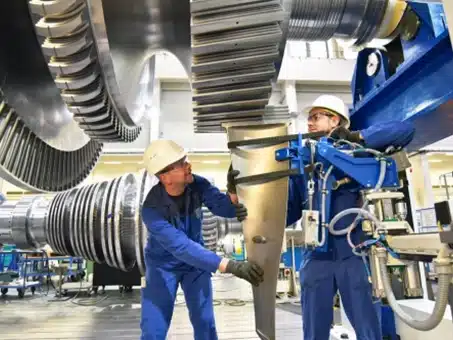
Have you ever wondered how your dream bicycle was built? How does the manufacturer get the wheels to stop wobbling, and how do they ensure the screws do not wear out after a day of riding? This is what parts manufacturing is all about.
From bicycles to car engines and airplane turbines, the theory of building complex parts in factories is fascinating. These parts are built to be strong, precise, and long-lasting, ensuring that the entire system runs smoothly and safely.
Modern manufacturing has evolved to create complex parts that can withstand higher temperatures and unprecedented pressure. The goal is to build the strongest part, but also the most efficient and durable one. Advanced metal manufacturing techniques like automated machines, robotic systems, and smart data tools help engineers build parts with more precision and less waste.
It’s all about pushing the boundaries of what is possible.
How Parts Manufacturing Has Evolved for High-Performance Metal Applications
What do you picture old-school manufacturing to have been like? Blacksmiths working in harsh conditions, hot workshops with hammers and an anvil. Pounding metal into shape and wasting a lot of material in the process.
For a while, this worked just fine.
But today, parts manufacturing looks very different. In fact, the use of computers, robots, and smart machines has transformed how manufacturers approach their jobs. The goal is still the same: build the strongest, most efficient part. But now, manufacturers can do it in less time and without wasting expensive material.
From Hammer and Heat to Computers and Code
The world of manufacturing looks very different today thanks to advanced technology. Engineers now use advanced systems like DED to create detailed designs and form metal parts instead of cutting them out of solid blocks.
The extreme precision and efficiency of these methods make it difficult for manufacturers ever to want to go back. In fact, reports show that the Additive Manufacturing industry grew by 11.1 % in 2023, which amounts to US$20.035 billion.
Driving Innovation With Performance
Metal parts play an important role in industries like aerospace, automotive, aviation, and medical equipment. What seems like a tiny component inside a jet engine could be the reason the motor fails. This is not just expensive; it is catastrophic.
These industries use additive manufacturing, which is a form of 3D printing, to create parts where precision drives performance and ensures safety. This is especially important for high-performance applications like aircraft turbine blades or custom medical implants.
Scalability & Demand
Additive manufacturing builds parts layer by layer exactly as designed, eliminating errors. This approach works especially well for aerospace components that require lightweight and precise designs.
The process also takes far less time, which makes it scalable. Smart systems like additive manufacturing help factories produce hundreds, if not thousands, of parts reliably in a fraction of the time.
And they can do it without overworking employees in dangerous conditions. Modern manufacturing is a blend of digital design, automated production, and careful material science. It meets all the requirements of key industry players: strength, weight, precision, and output.
Addressing the Challenges of Large-Scale Metal Production
When factories manufacture smaller parts like screws or bolts, workers can easily lift and move them around the workshop floor. Now think about a company that manufactures massive metal frames or heavy machinery. How do you think that works? These are the kinds of challenges that large-scale manufacturing introduces.
Building something like a wind turbine indoors presents a serious challenge. Engineers must consider how these large parts will be heated, cooled, moved, bent, or twisted during the production process.
Aside from structural challenges, manufacturers also face material-handling challenges. These large components must move safely without risking worker safety. Cranes, fixtures, and precision alignment systems often move parts from one stage to another.
This is exactly why traditional manufacturing methods fall short and are no longer feasible for companies that need both high productivity and high precision at the same time.
Often, engineers and manufacturers build smaller prototypes during the production process. This approach allows them to test the concept in the real world before committing to full-scale production. Prototypes enable teams to test parts under stress to see whether they bend or crack. Once approved, they can move on to the final version.
The Future of High-Performance Industrial Manufacturing
The future of parts manufacturing looks like laser beams and glowing metal parts alongside robots and touchscreens. There are no hammers in sight—and here’s why.
In the past, manufacturing involved cutting parts out of large blocks of metal. Today, the tools are far more precise, and the results are more consistent. Advanced materials and smart technology now replace old machines and manual labor, guaranteeing lighter and tougher components.
Manufacturers commonly use metal alloys to enhance durability and corrosion resistance, while smart machines share data in real time to make manufacturing as precise as possible.
Most factories now operate like tech campuses, where robotics and AI support skilled engineers as they produce metal parts. FormAlloy is a great example of this approach. With its Directed Energy Deposition (DED) system, manufacturers can build ultra-high-performance parts with unmatched precision and scalability.
Want to learn more about FormAlloy’s DEDSmart® technology? Request a demo or speak to an expert today.