TL;DR
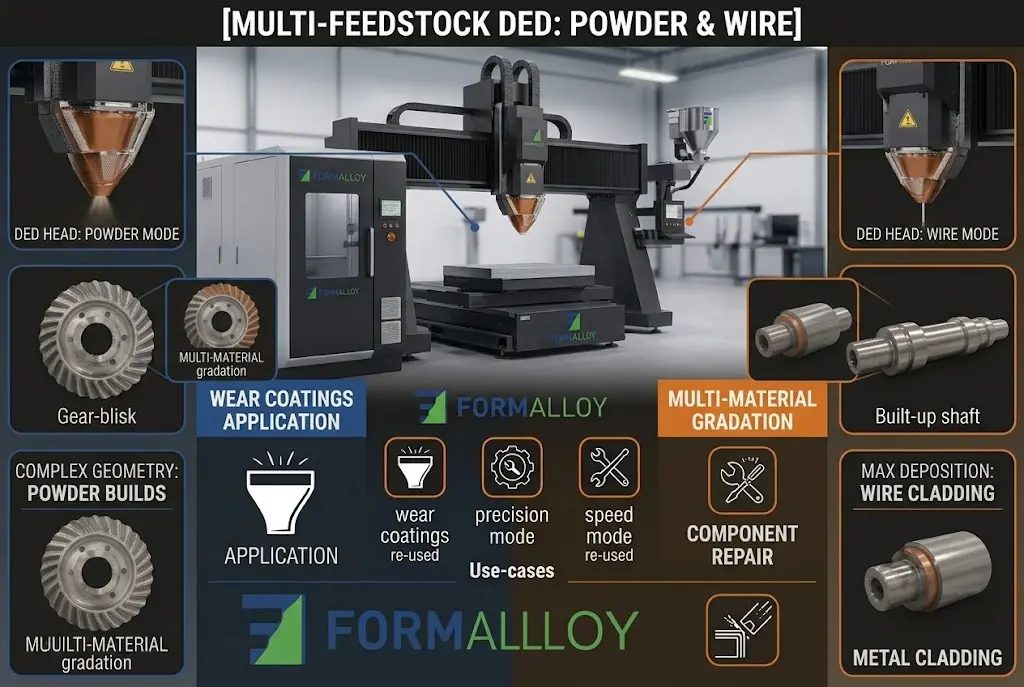
FormAlloy systems process both powder and wire feedstock on the exact same additive machine platform. Powder feeding delivers fine geometric detail while wire feeding offers maximum deposition rates for heavy builds. Manufacturers select the best feedstock method for every project without swapping machines.
Dual Feedstock Flexibility in Directed Energy Deposition
Industrial production teams often ask a core question when selecting additive hardware: can FormAlloy systems use both powder and wire feedstock? The answer is yes. Our advanced platform supports both powder and wire feedstock within one unified machine setup. This unique capability lets shop operators switch between raw material forms seamlessly based on part goals. You no longer need to buy separate machines for different jobs.
Choosing between metal powder and solid wire feeding depends on your exact project needs. Fine powder streams deliver superior control, smooth surface finishes, and complex custom alloy mixing. Solid wire feeding provides high deposition rates, minimal raw material waste, and exceptional speed for heavy metal structures. By joining both methods in one system, shops cut equipment expenses while speeding up overall delivery timelines.
Why Multi-Feedstock Capability Matters for Manufacturing
Having a single machine that handles multiple raw material types changes how facilities bid on complex contracts. Shop managers no longer have to turn away specialized jobs or purchase expensive single-purpose machine tools.
Instead of forcing owners to invest in two dedicated platforms, our team built a flexible print head architecture. This setup handles both media formats without compromising accuracy. As a result, facilities expand their service offerings while keeping overhead costs low.
Performance Analysis of Powder Versus Wire Delivery
Each feedstock type offers unique advantages for metal fabrication, cladding, and part repair. Fine powder is best for intricate geometry, thin walls, and custom metal blends. Wire feedstock is best for fast build rates, large structural shapes, and lower material costs.
The table below outlines key operational differences between powder and wire processing:
| Performance Metric | Metal Powder Feedstock | Solid Wire Feedstock |
| Material Utilization Rate | Moderate capture rate | Up to 100 percent capture rate |
| Deposition Speed | Precision-controlled rate | Maximum deposition speed |
| Feature Detail Control | Fine detail and thin walls | Coarser structural builds |
| Alloy Customization | Real-time metal powder blending | Fixed wire alloy composition |
| Material Handling Needs | Sealed powder storage required | Simple standard spool storage |
A comprehensive additive manufacturing study from the National Institutes of Health shows that wire feeding delivers higher material capture efficiency, whereas powder feeding provides superior geometric detail control.
Key Technical Advantages of Hybrid Feedstock Platforms
Operators can deposit solid wire to build thick base structures quickly, then switch to powder delivery for intricate features or specialized surface coatings.
- Lower machinery costs by running two distinct deposition styles on one machine frame.
- Save valuable floor space inside busy manufacturing plants and repair facilities.
- Mix standard commercial wire with custom metal powders on the same build project.
- Eliminate complex part realignment steps between different manufacturing steps.
FormAlloy systems feature flexible nozzle designs that handle both feedstock styles cleanly. Our proprietary technology maintains stable laser energy heating and consistent melt pool control across all build cycles.
Commercial Applications Across Advanced Industries
Dual feedstock flexibility opens new options for demanding sectors like aerospace, energy, defense, and heavy equipment repair. Engineers routinely use powder feeding to create custom-graded materials and protective surface layers. Powder feed mechanisms allow real-time mixing of different metals to tailor mechanical properties across a single part.
In contrast, wire feeding provides the fastest route for large structural repairs and high-volume cladding projects. Shops conducting industrial metal cladding apply wire feedstock to rebuild worn drive shafts, valves, and heavy pump housings quickly.
Whether applying specialized wear coatings or performing precision component repair, having access to both feedstock formats ensures optimal output quality and lower unit costs. Explore our complete line of DED systems to see how dynamic feedstock hardware improves total factory output.
Operational Workflow for Material Conversion
Switching between powder and wire modes on FormAlloy equipment is simple and fast. Our hardware uses modular deposition heads that mount directly onto standard optical laser assemblies.
Operators transition between feeding modes using simple steps:
- Select the correct feedstock operational profile in the system software interface.
- Mount the wire feeder module or connect the powder delivery hose to the laser head.
- Verify process settings for laser power, feed velocity, and shielding gas flow rates.
- Run standard calibration routines to align laser focus with the raw material path.
Our systems use closed-loop monitoring to maintain proper standoff distance and melt pool temperature constantly. This real-time control guarantees high deposit quality across both powder and wire production runs.
Streamlining Shop Scheduling and Material Sourcing
Integrating flexible additive hardware simplifies shop planning and eliminates operational bottlenecks. Production teams no longer need to compromise between fine detail accuracy and rapid metal deposition speed.
Supporting both raw material forms streamlines purchasing. Purchasing managers can source standard welding wire spools for high-volume projects or buy atomized powders for specialized alloy builds. This dual capability helps contract manufacturers expand their service offerings without buying extra machines.
If metal powder delivery slows down, operators can use available wire stock for compatible jobs. If a project requires a rare metal blend, operators can switch back to powder feeding.
Financial Advantages for Job Shops
Investing in versatile dual-feedstock equipment delivers immediate financial benefits for expanding job shops. Purchasing two separate machines doubles your initial capital outlay and increases ongoing maintenance demands. A single multi-feedstock system cuts your equipment investment while maximizing daily machine utilization rates.
Dual feedstock technology provides a clear competitive edge. Job shops can bid on diverse manufacturing contracts with full confidence.
Frequently Asked Questions
Can FormAlloy systems use both powder and wire feedstock in one machine?
Yes, FormAlloy systems process both powder and wire feedstock on a single equipment platform. Operators can switch between powder and wire delivery modes quickly to meet specific job requirements without changing machines.
Is powder or wire feedstock better for metal printing?
Neither is strictly better because both serve distinct needs. Powder feedstock provides finer geometric control, smooth surface finish, and alloy blending capabilities. Wire feedstock offers faster deposition rates, zero waste, and lower raw material costs.
How long does switching from powder to wire take on FormAlloy hardware?
Switching between feedstock modes takes minimal time due to modular quick-change feed heads. Operators simply swap the feeding attachment, load the corresponding software profile, and verify laser alignment before starting the build.
Does wire deposition require different laser settings than powder deposition?
Yes, wire deposition requires adjusted laser power, travel speed, and feed rate settings. These parameter adjustments ensure complete wire melting and strong fusion without causing excess spatter or unwanted heat accumulation in the part.
What metal alloys are available in both powder and wire formats?
Most industrial alloys are available in both formats, including titanium alloys, nickel superalloys, stainless steels, tool steels, and cobalt blends. This wide selection gives manufacturers total material freedom for diverse applications.
Are solid wire feedstock materials cheaper than metal powders?
Solid wire feedstock generally costs less per pound than gas-atomized metal powders. Using wire for bulk deposition reduces total part cost, making it an economical option for large structural builds and heavy cladding jobs.
Can dual feedstock systems fabricate functionally graded components?
Yes, powder feeding modes allow dynamic mixing of different elemental metal powders during deposition. This process creates smooth, continuous material transitions across a single component without requiring joint welds or mechanical fasteners.
What is the material utilization efficiency of wire feedstock?
Solid wire feedstock achieves near 100 percent material utilization during laser deposition. Every inch of wire feeds directly into the molten pool, eliminating powder waste and reducing overall raw material expenses significantly.
Do FormAlloy systems use separate feed heads for powder and wire?
FormAlloy uses modular feed head attachments designed specifically for powder or wire delivery. These specialized attachments connect to the same laser optical core and motion stage for maximum hardware utility and convenience.
Essential Insights
- FormAlloy systems process both powder and wire feedstock on a single machine platform.
- Powder feeding provides fine geometric control, smooth surface finish, and real-time alloy blending.
- Wire feeding delivers maximum deposition rates, zero material waste, and lower raw material expenses.
- Dual feedstock capability reduces capital costs by eliminating the need for separate dedicated machines.
- Quick-change modular heads allow fast transitions between feeding modes with minimal operational downtime.
Transform Your Metal Production Capabilities
Are you ready to elevate your additive manufacturing operations with flexible dual feedstock hardware? FormAlloy delivers industry-leading laser deposition systems built for demanding industrial environments. Contact our expert team today to discuss your production goals and arrange a custom equipment demonstration.