What most people don’t realize about building airplane parts is that the key metals used in the process, such as titanium, are incredibly expensive. That means every piece you make can cost you up to hundreds of dollars. So even the smallest mistakes can be detrimental to the business.
Nowadays, factories are struggling because the price of metal has surged, alongside rising energy costs and growing environmental regulations. Expensive alloys are not just used for aesthetics; they are used to meet industry requirements for aerospace, defense, and engineering.
This is why Directed Energy Deposition is so popular among manufacturers. It helps them achieve material efficiency, so expensive metals don’t go to waste.
What Material Efficiency Means in DED
When you look at an airplane, how do you think it was built? How were the individual parts created and put together? Well, believe it or not, there was a time when the parts were carved out like statues from stone. Not only was this inefficient and time-consuming, expensive material would get wasted in the process.
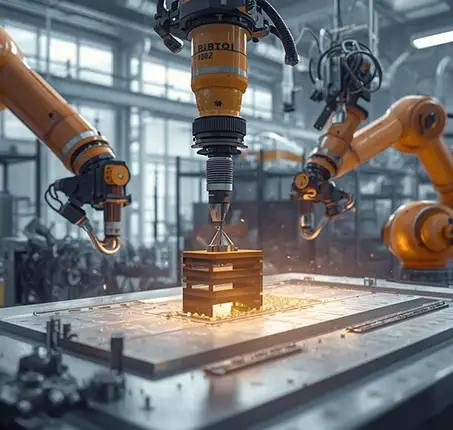
Manufacturing methods have come a long way since. Now you can draw the part you want, line by line, using metal. This process is called Directed Energy Deposition (DED), and it guarantees material efficiency.
But what is material efficiency?
Material efficiency is when you use only the amount of metal you need to build a part, and there is a 70-80% reduction in waste. Manufacturing methods like DED create the exact shape you want by feeding metal powder or wire through a nozzle to achieve precision. The process can best be described as adding frosting onto a cake, but it’s metal, and you’re building a critical component for an airplane.
How DED Minimizes Material Waste Compared to Traditional Methods
Here’s how traditional manufacturing worked:
- You start big.
- Cut away the excess.
- Throw out the material you cannot use.
The problem with that system is that when you begin with a large metal block, you can end up with 80% of it as scrap. That metal could be expensive, like titanium.
Not to mention, this process is time-consuming. Delivering a mission-critical component can take weeks, if not months, to repair or duplicate..
In comparison, Directed Energy Deposition adds metal layer by layer instead of subtracting it. This process creates less scrap, lowers material costs, and is far more efficient. The only material you use is what is being deposited onto the build path and melted using precise lasers.
The accuracy and efficiency of processes like wire-DED and powder-DED make them ideal for large aerospace structures because there is nearly 100% utilization, and you also cut down on both cost and lead time.
Key Factors That Influence Material Efficiency in DED
Material efficiency in DED goes beyond using less metal. This is a sophisticated system that allows you to build aerospace engines like a LEGO model, with every piece fitting perfectly.
Here are some factors that influence material efficiency:
High-Quality Powder or Wire
The reason why DED systems can create a complex part accurately from a design is because the wire or powder is melted consistently and predictably. The powder or wire is delivered on the build path with precision using a wire feedstock that minimizes spatter, fume, or minor losses around the melting pool.
Think of it like baking utensils that come in different shapes — once you deposit the dough in that shape, you get brownies in that precise shape.
Melt Pool Control
The melt pool is the tiny molten spot created by the laser. If the laser is too hot, it will burn the wire, or the puddles will be out of shape. If the laser is not hot enough, the wire will not melt right away, and the process will take longer than expected.
But thanks to DED, energy density stays consistent, so you can expect the melt pool to stay stable throughout. The great thing about this technology is that the stable melt pool ensures you don’t waste powder, the correct energy density ensures the layers are strong, and the balanced deposition rate ensures every part is consistent with the design.
In-Process Monitoring & Closed-Loop Systems
Let’s say something does go wrong — what do you do? The great thing about modern systems, such as FormAlloy’s DEDSmart® , is that they are equipped with feedback tools such as live visibility and playback. This allows you to watch in real time, and if something goes wrong with the melt pool, it will auto-correct for the best results.
Why DED Is the Future of Smart Manufacturing
Material efficiency is quickly becoming the backbone of smart manufacturing. Seeing the rising price of metal and how sustainability regulations are becoming more strict, the global supply chain needs smart manufacturing solutions now more than ever. This is exactly why industries like aerospace, defense, energy, and manufacturing are relying so heavily on FormAlloy’s Directed Energy Deposition systems.
If you are ready to transform your material efficiency with the next-gen DED solutions we have to offer, contact us for a demo.
Frequently Asked Questions
Q1: What does “material efficiency in DED” mean?
It refers to using the least amount of metal feedstock possible while still producing high-quality parts through Directed Energy Deposition.
Q2: Why is DED more material-efficient than machining?
DED builds parts layer by layer, so manufacturers avoid the 70–90% material waste common in subtractive machining.
Q3: Does DED work with both powder and wire feedstock?
Yes, DED systems can use metal powder, wire, or both, depending on the application and efficiency goals.
Q4: How does DED reduce production costs?
By minimizing waste, speeding up build times, and repairing existing parts instead of replacing them.
Q5: Is DED suitable for high-value metals like titanium and Inconel?
Absolutely, DED is widely used for expensive alloys where material savings matter most.
Q6: Can DED repair damaged parts?
Yes, DED can add new metal to worn or broken sections, restoring components and extending their lifespan.
Q7: What industries benefit most from DED material efficiency?
Aerospace, defense, energy, marine, and MRO sectors rely on DED to cut waste and improve performance.
Q8: How does in-process monitoring improve efficiency?
Real-time sensors and closed-loop controls help keep deposition precise, reducing defects and rework.
Q9: What affects material utilization in DED?
Feedstock quality, melt pool control, deposition rate, machine calibration, and environmental factors.
Q10: How does FormAlloy improve material efficiency for manufacturers?
FormAlloy’s patented DED technology, advanced monitoring, and precision deposition systems maximize material usage and part quality.