You may not have heard of FormAlloy. Many haven’t. That’s the truth. The team admits it. They build more than they boast. They design more than they describe. But silence can be a problem. Because if people don’t know your tools, how can they use them?
So, FormAlloy is stepping into the light. They’re sharing what they’ve built. And what they’ve built may change how machines think, move, and create.
This story begins with a process called DED (Directed Energy Deposition). That sounds big and scary, but it isn’t. Think of it as painting with metal. A laser melts metal powder and lays it down, layer by layer, until a new shape is born. It can build or fix parts. Airplane blades. Engine pieces. Things that must last, even when the world shakes around them.
But to do that well, you need control. Tight, sharp, unbreakable control. Because when you mix lasers, motion, and melted metal, small mistakes become big ones fast.
And that’s where DEDSmart® RoboControl enters the dance.
The Dance of Metal and Light
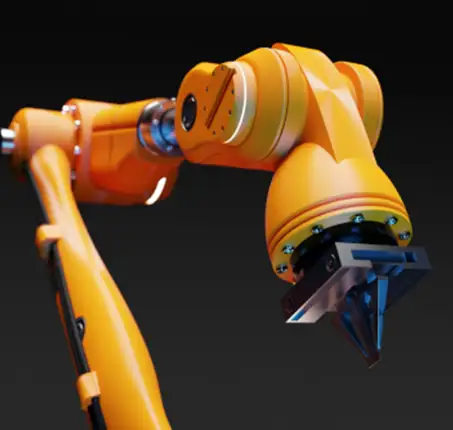
Think of a robot arm holding a laser. Next to it, a round table turns slowly. Together, they move in perfect sync, like a dancer and a drumbeat. Every twist, every tilt, every beam of light is planned and precise. That’s not easy. Eight different axes — eight directions of motion — have to move together. No slips. No delay. No guesswork.
Now, most people might ask: “Why not just use a regular robot controller? They already exist, right?”
A fair question. But the answer is sharp. Regular robot controllers are not for laser metal work. They don’t talk fast enough. They don’t share data cleanly. They’re like having two musicians play one song — one on drums, one on piano — but using different sheet music. It can work, but it never sounds perfect.
In normal setups, one controller moves the robot. Another one runs the laser and powder. Each sends its own signals. Each has its own clock. They never quite breathe together. And in a process where timing is everything — where a fraction of a second changes the melt — that tiny gap matters.
DED needs more. It needs unity.
One Brain, Many Moves
That’s what DEDSmart® RoboControl does. It brings all eight axes — robot arm, turntable, laser path — under one roof. One brain, one rhythm, one memory. It doesn’t juggle signals. It syncs them.
When you use it, programming doesn’t feel strange. It feels familiar. It’s like writing G-Code for a milling machine. You type the lines, set the paths, press go — and the robot listens, instantly. There’s no lag. No guess. No delay. It’s all tied together.
Why does that matter?
Because when light meets metal, timing rules everything. A few milliseconds too early, and the melt pool burns. A few too late, and the layer cracks. If you want smooth, strong parts, you need smooth, strong control.
That’s what DEDSmart® gives you. A tool that feels human in its timing. A robot that moves like it knows what it’s doing, not because it guesses, but because it knows.
The Beauty of Tight Control
FormAlloy’s engineers care about what others overlook — the small, quiet details that decide whether a part shines or breaks. They designed DEDSmart® to remove the noise, the lag, the stress. It keeps every signal crisp, every motion true, and every piece of data right on time.
Think of it like breathing. You don’t want to think about it. You just want it to happen — steady, calm, sure. That’s how this system works. It takes care of the hard stuff so you can focus on the shape, the goal, the result.
The robot arm glides. The table spins. The light dances. The code runs smoothly. It looks like art, but it’s science at its finest.
And when you watch it — as the co-founder of FormAlloy, Jeff Reimann, says — “Watch her dance.” That’s not just a phrase. It’s pride. It’s the joy of watching something complex become graceful.
But What Makes It Smart?
The “smart” in DEDSmart® isn’t a buzzword. It’s the quiet intelligence built into every movement.
It knows how to log data cleanly, without delay. It knows how to react in real time. It doesn’t waste milliseconds sending signals back and forth between machines that barely speak the same language. It speaks one language — its own.
And that’s a big deal.
Because when you build high-value parts, you can’t afford “almost.” You need “exact.” The tiniest slip in timing can ruin a run. The wrong temperature, a flicker in the laser, a lag in the motion — all can mean wasted hours and wasted metal. DEDSmart® cuts that risk down.
So, when you hear “smart control,” don’t think of gadgets or gimmicks. Think of trust. Think of steady control. Think of metal that flows exactly how it should.
Why This Matters
You might wonder, “Why should anyone care about a robot arm making metal parts?”
Because this is where the future hides — in quiet corners, in small improvements that add up. The better the control, the better the build. The faster the feedback, the stronger the parts. That means better planes. Better tools. Better energy systems. Safer worlds.
FormAlloy’s X5R machine with DEDSmart® RoboControl doesn’t just make metal. It shapes possibility. It builds what once took weeks in hours. It repairs what others would throw away. It brings precision to chaos.
And in an industry that’s often ruled by big words and bigger promises, FormAlloy’s truth is simple: They make machines that work.
Asking the Right Questions
Why do so many people still not know about FormAlloy? Because in a world that rewards loud voices, they chose quiet mastery. They built before they broadcast. But now, they’re ready to share.
Why did they make their own control system instead of using someone else’s? Because they saw the gaps others ignored. They wanted speed. They wanted precision. They wanted the control to feel natural, not forced.
Why does it matter that G-Code feels familiar? Because the easier it feels to program, the faster you create. And when people don’t have to learn a new system from scratch, adoption grows. Ideas move. Progress speeds up.
And maybe the biggest question of all: What happens when control, motion, and data move as one? Maybe then machines stop just following commands — and start performing.
The Dance You Can Trust
When you watch the video — the arm turning, the beam glowing, the table spinning — it looks alive. It’s not random. It’s not mechanical. It’s a dance that knows its rhythm. That’s what tight control does. It makes complexity look calm.
This isn’t about showing off robots. It’s about showing what’s possible when control meets creativity, when engineers care about what happens in the smallest slices of time, and when precision becomes beauty. When precision becomes beauty.
The DEDSmart® RoboControl doesn’t shout for attention. It just moves right — every single time.
A Promise of Change
FormAlloy knows they need to share more, show more, speak more. Because technology this capable deserves an audience. The industry deserves to know what’s possible. The world deserves better machines that don’t just build but understand the build.
This is the first of many stories they’ll tell. Each one will open another door into how DEDSmart® makes DED faster, steadier, and smarter. Each will show how their work turns chaos into art — one pulse of light at a time. Let’s connect.
FAQ: Quick Answers for Curious Minds
Q1: What does DED mean?
It means Directed Energy Deposition. It’s a process that builds or repairs metal parts using a laser and metal powder.
Q2: What makes FormAlloy different?
FormAlloy builds both the DED machines and the smart control systems that run them — all under one roof.
Q3: What is DEDSmart® RoboControl?
It’s a control system that connects the robot, the laser, and the motion into one brain. It keeps everything in sync for faster, smoother builds.
Q4: Why not use a normal robot controller?
Because normal controllers cause delays. They can’t handle laser and motion data together fast enough for high-precision metal work.
Q5: What does “8-axis” mean?
It means the system moves in eight directions (up, down, left, right, tilt, spin, rotate, and turntable movement) all at once.
Q6: Is it hard to program?
Not at all. It uses familiar G-Code, the same language used in CNC machines, so most users feel at home right away.
Q7: Why does “tight integration” matter?
Because in laser metal work, even a small delay can ruin a part. Tight control keeps every move and every melt perfectly timed.
Q8: What can this system build?
It can build or repair high-value metal parts (from aerospace pieces to energy tools), anything that needs strength and accuracy.
Q9: What’s next for FormAlloy?
FormAlloy will keep sharing more about DEDSmart® technology and how it makes metal manufacturing smarter, faster, and more reliable.
Q10: Where can I see it in action?
Watch the FormAlloy X5R with DEDSmart® RoboControl dance in their video — it’s precision turned into performance.