A wind turbine stops working. Every day it sits idle, you lose $800 to $1,600. Most blade repairs take one to three days.
Now think about how many of your turbines are hitting the ten-year mark. Major repairs become routine.
The math adds up fast.
The old way of fixing wind turbine blades just doesn’t work anymore. When a blade gets damaged, you have to shut everything down. Then comes the crew, the crane, and hours of slow, expensive work. A new blade runs about $200,000. Repairs can cost up to $30,000, but the downtime and lost energy might cost even more.
There’s a smarter way. Expert wind turbine blade repair using advanced manufacturing technology can repair blades much faster and get turbines back online in less time.
Why Wind Turbine Blade Damage Happens
Wind turbine blades spin more than 30 times a minute, all while operating in some of the harshest conditions out there.
Over time, these brutal conditions cause predictable damage:
- Leading-edge erosion — The surface wears down from nonstop exposure to dust and debris. This cuts into how well the blade moves through the air and, if ignored, can weaken the whole structure.
- Cracks and delamination — These happen inside the blade when the layers start to separate. You often can’t see the damage until something goes seriously wrong.
- Impact damage — Hail, birds, or flying debris can leave dents or even cause hidden damage beneath the surface.
- Lightning damage — Sometimes lightning strikes. A direct hit and the associated thermal stress can burn or crack the blade.
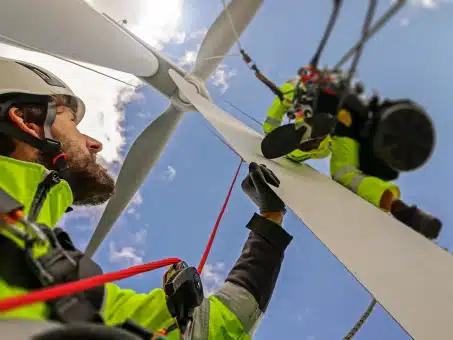
Traditional repair methods don’t help much. Technicians have to climb more than 300 feet, spend days fixing blades by hand, and usually only manage a quick fix instead of a real solution.
Research published in PubMed (2024) shows that when sand and other airborne particles hit a blade’s leading edge at high speed, they slowly wear it down and add stress inside the blade. Over time, this reduces aerodynamic performance and weakens the blade’s structure. The study also found that things like particle size, how they hit, and wind speed all affect how quickly erosion happens. That’s why blades in tough environments wear out faster.
The True Cost of Downtime
Most turbine operators make a common mistake when adding up costs.
They see a repair bill for $30,000 and think it’s not bad compared to replacing a blade for $200,000.
But that’s just part of the picture. You also have to factor in:
- Getting the crew on site: $10,000 to $20,000
- Crane rental and setup: $350,000 a week
- Lost energy while the turbine sits idle: $800 to $1,600 a day
- Hidden damage that gets missed, leading to more repairs down the road
When you add it all up, a typical repair and the downtime that comes with it can easily cost over $50,000 once you include lost revenue.
The Calculation That Matters: Speed.
The faster you repair, the less money you lose. Every day a turbine is offline means lost revenue.
Traditional blade repairs can take two to four weeks.
With expert, advanced repair methods, you’re looking at just a couple of days.
That time difference gives you the edge.
How Expert Wind Turbine Blade Repair Works
Professional wind turbine blade repair increasingly relies on advanced manufacturing methods like directed energy deposition (DED) to restore metal and metal-reinforced blade components quickly and precisely.
The Process:
First, experts assess the damage. Then they set the repair parameters, fix the blade, and double-check the quality.
Instead of hours of manual labor, DED technology deposits thin layers of material right where they’re needed. This restores the blade’s shape and strength.
This approach works for both metal and metal-reinforced composite blade components.
At FormAlloy, expert wind turbine blade repair uses DEDSmart technology with real-time monitoring and control. Every fix is carefully tracked, checked, and proven to meet standards before the turbine goes back online.
Types of Blade Damage That Can Be Repaired
Metal structural damage (blade root, hub interfaces, bolt holes)
DED is great for restoring metal components. It repairs erosion, cracks, and corrosion by adding just the right amount of new material.
Composite leading edge damage (with metal reinforcement)
Many modern blades use metal-reinforced leading edges for lightning protection. DED technology brings these edges back to their original shape.
Erosion patterns (aerodynamic surface restoration)
Leading-edge erosion reduces efficiency and aerodynamic performance. DED can rebuild the blade’s profile and smooth out the surface, improving performance.
Root and hub connections (high-stress areas)
The blade root experiences a lot of stress. Damage here is critical. DED repairs bond the new material at the molecular level, not just with bolts or glue. This keeps the structure strong for the long haul.
Of course, not every blade can be saved. If the whole structure fails or the blade is delaminated from end to end, replacement is the only option. But for most everyday damage, DED repair is a cost-effective solution.
Beyond Speed and Precision
Advanced manufacturing methods like directed energy deposition aren’t just fast and precise; they’re also better for the environment than many traditional repairs.
Research on additive and subtractive manufacturing technologies shows that these advanced methods can boost performance and cut waste by using materials more efficiently.
Choosing modern repair technology isn’t just good for uptime. It’s a smart move for sustainability, too.
Expert Wind Turbine Blade Repair Services Offered
Professional repair teams do much more than just fix blades. Here’s what they offer:
Inspection & Assessment
They start by figuring out what can be fixed and what needs to be replaced. With drones and thermal imaging, they find damage you can’t even see with the naked eye.
Parameter Development
Before full-scale repair, experts test their methods on samples or less critical spots. This makes sure the repair method will work for your blade and the type of damage.
Repair Execution
This is where the real work happens. For metal damage, DED gives fast, precise repairs. For composite damage, the process rebuilds strength and reinforcement.
Quality Control & Verification
After repairing, the team checks everything over again. They may run mechanical tests and document each step, proving the blade is ready to go back into service.
Preventive Solutions
They also offer ways to protect blades from future damage. Leading-edge protection and corrosion-resistant coatings help blades last longer between repairs.
Do Wind Turbine Techs Repair Blades?
Yes, but it’s getting more complicated.
Most wind turbine technicians handle regular maintenance, inspections, and small repairs. When they climb up, they’re usually working on the structure or electrical systems.
Blade repair is turning into its own specialty. It takes:
- Knowledge of both composite and metal materials
- The right advanced repair tools
- Precision manufacturing skills
- Careful quality checks
Repairs that use DED technology need experts with specialized training—more than what most wind turbine techs learn in the field.
This is where expert manufacturing partners come in.
Choosing a Blade Repair Partner
Not all repair teams are the same. Ask these questions:
- Do they have wind industry experience? Working on blades is different from regular metalwork. You need someone who understands the unique demands.
- What’s their repair process? Is it just manual repairs, or do they use precise, automated tech like laser deposition? The method makes a big difference.
- Can they demonstrate previous repairs? Look for examples and references from other wind operators, not just promises.
- Do they offer parameter development? A good partner tests repairs on your exact damage before going all in.
- Can they minimize downtime? Advanced repairs should take days, not weeks.
FormAlloy uses directed energy deposition for top-quality, fast blade repairs. We test, monitor, and document every step, so you know the job meets the highest standards.
The Future of Wind Turbine Blade Repair
Blade damage will continue to increase as the global wind fleet ages.
First-generation turbines now need major repairs. Second-generation turbines are starting to show wear, too.
Operators who use advanced repair tech get ahead. They spend less on maintenance, cut downtime, and make their turbines last longer.
Those sticking with traditional methods will see costs and downtime climb as their equipment ages.
The choice is simple. Advanced blade repair is a must for staying competitive as turbines get older.
Ready to Reduce Your Blade Repair Costs?
Downtime costs you money. Old repair methods take too long. There’s a better way.
Whether you need to fix one blade or want a full preventive plan, FormAlloy has the expertise you need.
Reach out today to talk about your blade repair needs.
Frequently Asked Questions
Q1: How long does expert wind turbine blade repair take?
Most repairs take three to ten days, depending on the damage. That’s much faster than the two to four weeks needed for traditional fixes.
Q2: Can a damaged blade be repaired, or must it be replaced?
Most common issues, like erosion, cracks, or corrosion, can be repaired. If the blade has major structural damage or a lot of delamination, it may need to be replaced. Professional assessment determines what’s repairable.
Q3: How much does wind turbine blade repair cost?
It depends on the damage and blade size. Most advanced repairs run between $15,000 and $40,000. That’s a lot less than paying $200,000 or more for a new blade and dealing with extra downtime.
Q4: What’s the difference between temporary and permanent blade repair?
Temporary fixes, like manual patches, only solve the problem for a little while. They often don’t last under operational stress. Permanent repairs, using advanced methods, rebuild the blade’s strength and shape so it lasts much longer.
Q5: What materials are used in advanced blade repair?
Repairs use special alloys that match the blade’s original material. Depending on the damage, techs might also add metal reinforcements or protective coatings.