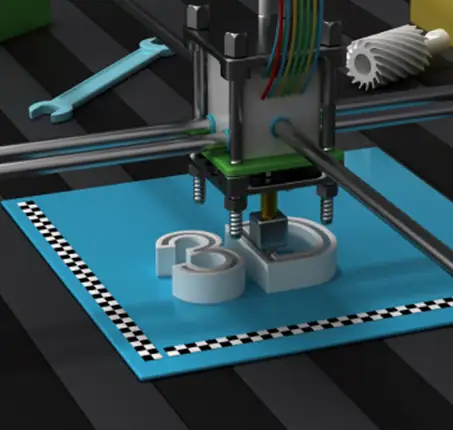
There was a time when you could only find metal 3D printers inside university labs or high-tech research centers. But today, there are many factories that use metal 3D printers in their manufacturing processes. A 3D printer can help replace the small metal bracket and even build large parts of a jet layer by layer to ensure better performance.
It is quite similar to stacking LEGO bricks exactly as required, until you have the desired shape. Metal 3D printing is popular among modern manufacturers because of its ability to reduce material waste and shorten lead time. This is ideal for complex comments that would otherwise be very difficult, time-consuming, and expensive to produce.
The demand for 3D metal printing has increased remarkably, growing up to 24.4% in 2024 alone. It has become hard to ignore, as some of the most renowned manufacturers are now using it to build prototypes, optical supply cables, and produce parts that are more flexible and resilient.
How a Metal 3D Printer ACTUALLY Works in Real Manufacturing Environments
While metal 3D printing produces complex parts, the process is relatively simple. It is interesting to see how a printer lays down ink on paper or how a 3D printer builds plastic figurines.
The only difference is that it uses metal instead of ink or plastic.
Here’s how it works
The engineer starts the process by providing a digital design. This is a detailed 3D drawing of her part of the file that helps the printer identify exactly where to place the metal. The printer follows instructions step by step and adds material accurately down to the smallest fraction.
The process then follows those instructions step by step as material is added in the specific location, which, over time, builds a fully solid metal part. When it comes to repairing parts, the printer rebuilds the damaged section directly onto the existing part, like fixing a chipped tooth/
Industrial metal printing uses a controlled heat source that melts and fuses metal so that you have a fully dense and strong part. Manufacturers need to produce parts with mechanical strength, so they need technology that helps them build trusted aircraft parts, heavy machinery, and tools.
Why Manufacturers Are Moving Toward Metal 3D Printing
The manufacturing works under a lot of pressure to not only produce high-quality parts, but also do so quickly and on a budget. Delays in the supply chain, rising metal prices, and increasingly complex designs can make things even more difficult for manufacturers. This is why traditional manufacturing is being phased out and replaced with metal 3D printing.
To put it simply, 3D printing is a more practical solution than traditional manufacturing. 3D metal printing helps you enhance prediction by handling touch material and designing parts that meet strict quality standards.
Working with a range of metals gives manufacturers more options when it comes to designing parts. It allows you to create parts that withstand extreme heat, pressure, and wear. The best part? There’s less labor, faster development, and time efficiency, making it the easy choice for looking to stay competitive.
Building Smarter and Faster With FormAlloy
Manufacturers are looking to produce complex parts faster and more efficiently. This makes metal 3D printing not just a strategic advantage, but a must-have. Companies that understand how to leverage technology stay ahead of their competitors.
At FormAlloy, we believe the industrial-grade metal additive manufacturing solution helps businesses to turn digital design into efficient metal parts. Aerospace components are becoming easier to deliver and much more reliable.
If you are ready to see how metal 3D printing is transforming the manufacturing processes, contact FormAlloy today.
Frequently Asked Questions
Q1: What is a metal 3D printer?
A metal 3D printer is a machine that builds solid metal parts layer by layer from a digital design. Unlike traditional machining, it uses only the metal needed, reducing waste and allowing complex shapes that were impossible before.
Q2: How does a metal 3D printer differ from a regular 3D printer?
Regular 3D printers use plastics or resins, while metal 3D printers work with metals like titanium, steel, or aluminum. They require more power, precision, and advanced technology to make parts strong enough for industrial use.
Q3: What are the main types of 3d metal printers?
The two most common types are Directed Energy Deposition (DED) and Powder Bed Fusion (PBF). DED is great for repairing parts or adding material, while PBF is ideal for producing highly detailed components from scratch.
Q4: Can manufacturers 3d print metal parts for aerospace applications?
Yes. Aerospace companies use 3d printed metal technology to create lightweight, strong components. For example, jet engine brackets and turbine parts are often 3D printed to reduce weight without sacrificing strength.
Q5: Are metal 3d printers only for prototyping?
No. While they started with prototyping, modern metal 3d printers are used for full-scale production, repairs, and custom parts, making them suitable for industries like automotive, defense, and energy.
Q6: How fast can a metal 3D printer produce parts?
Production speed varies by machine and part complexity. Some industrial systems can produce functional components in hours instead of weeks, helping manufacturers reduce downtime and speed up delivery.
Q7: Is metal 3D printing expensive?
The initial cost of a metal 3D printer can be high. Still, it often saves money by reducing material waste, shortening lead times, and enabling part repairs that would otherwise require replacement.
Q8: What materials can be used in 3d Systems’ metal printer technology?
Industrial 3d systems metal printer platforms typically work with metals like stainless steel, titanium, nickel alloys, and aluminum. The choice depends on the part’s strength, heat resistance, and application.
Q9: How strong does a metal 3D printer make parts?
Parts are fully dense and can be as strong as traditionally manufactured metal. According to recent studies, industrial metal 3D printing produces components suitable for high-stress applications like aerospace and heavy machinery.
Q10: Where can I learn more about using a metal 3D printer in my factory?
You can explore industrial solutions at FormAlloy. Their team can guide you on selecting the right metal 3D printer, choosing materials, and integrating additive manufacturing into your production process.