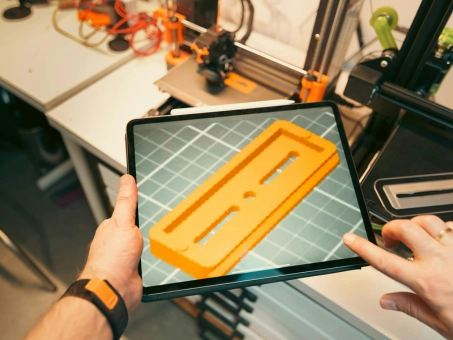
FormAlloy is suitable for both research and production because its directed energy deposition systems are built to scale. Teams can start with material testing and process development, then move to full-volume part building and repair on the same platform. No platform switch. No lost data. No workflow restart.
The Hidden Cost of Switching Platforms Mid-Project
Most manufacturing teams do not realize how much they lose when moving from a research platform to a production system. Parameters change. Processes need revalidation. Teams rebuild workflows they have already proven. Time, budget, and momentum all take a hit.
This is one of the most common problems in metal additive manufacturing. A team spends months developing a new material or repair process on a research-grade machine, then has to start over when it is time to produce parts at scale. The two systems behave differently. The data does not transfer. What worked in the lab does not automatically work in production.
The question “Is FormAlloy suitable for both research and production?” comes from teams who have lived through that problem and are looking for a way out. The answer is yes, and it is worth understanding exactly why that matters for your operation. Visit the FormAlloy FAQ page to see how the company addresses this directly.
How FormAlloy Bridges Research and Production on One Platform
FormAlloy systems are built around directed energy deposition technology that adapts through configuration rather than replacement. The same core hardware and software that a materials scientist uses to test a new alloy blend is the same system a production engineer uses to run repeatable part builds at volume.
The FormAlloy DEDSmart platform is central to this. It captures every build parameter in real time and stores it for replay. A process developed during research and development can be locked in and called back for every subsequent production run. That means the transition from research to production is not a restart. It is a continuation of work already done.
NIST has documented that the ability to achieve predictable and repeatable operations is critical for advancing metal additive manufacturing across both development and production environments. FormAlloy builds this capability directly into the platform, so teams do not have to engineer it separately for each phase of work.
The FormAlloy manufacturing solutions page outlines how the X-Series and L-Series systems support everything from compact research builds to large-format production parts on the same core architecture.
What Research Mode Actually Looks Like on a FormAlloy System
When a team uses a FormAlloy system for research and development, they are not working with a stripped-down version of the machine. They have access to the full parameter set: laser power, feed rate, travel speed, powder blend ratios, and real-time melt pool data. This depth of control is what makes serious material science work possible.
FormAlloy supports functionally graded materials and multi-powder blending during a single build. Researchers can test how different alloy combinations behave across one part, something that would require multiple builds elsewhere. The Application Development Center is where many of these experiments run before a process moves to production.
The FormAlloy DED products and services page describes the development services the company offers directly to customers, supporting research, product development, and application maturation. Teams can work with FormAlloy engineers to refine processes before those processes get locked into a production workflow.
NIST research on additive manufacturing research areas highlights materials, processes, and measurement as the core areas where structured AM development work delivers the most industrial value. FormAlloy systems are designed to support structured work in all three areas without requiring a platform change when results are ready to scale.
Scaling to Production Without Starting Over
The move from research to production is where most additive manufacturing programs stall. Teams have proven to be a process. They know it works. But scaling it requires requalification, new equipment, or both. That gap is exactly what FormAlloy was designed to close.
Because the same DEDSmart software controls both research and production builds, the parameter sets developed during testing carry directly into high-volume runs. Closed-loop control and real-time monitoring that guided research builds continue to guide production builds. The system does not just tolerate scale. It is engineered for it.
FormAlloy offers scalable build volumes from 250 mm compact systems to large formats over one meter. A team can start research on a smaller system and move to a larger configuration without losing process knowledge. Read more on the FormAlloy advanced manufacturing processes blog.
The FormAlloy metal additive manufacturing insights page covers how the platform supports both small-batch R and D and full production line integration, including multi-axis capabilities, automated toolpaths, and part traceability.
Industries That Need Both Research and Production in One System
The need for a platform that handles both research and production is not limited to large aerospace primes. It shows up across any sector where parts matter, and failure has consequences.
Aerospace teams need the flexibility to test metallurgy and the reliability to run repeatable repair cycles at scale. Defense programs must move from prototype to mission-ready parts without rebuilding qualification data. Energy operators need to test new cladding materials under real conditions, then deploy those processes across field repair programs.
FormAlloy serves all of these environments. The system does not force a choice between experimental capability and production reliability. It delivers both in a single platform that grows with the program.
Explore how the platform fits different industry applications on the FormAlloy manufacturing solutions page, and reach out through the FormAlloy contact page to discuss how your specific research-to-production workflow maps onto the system.
Conclusion
The question is FormAlloy suitable for both research and production has a clear answer: yes, and the platform was designed with that exact need in mind. Teams that use FormAlloy do not face the painful, expensive process of rebuilding validated workflows when it is time to scale. The same system, the same software, and the same process data carry through every phase.
In industries where qualification costs are high and timelines are tight, avoiding a platform switch can mean the difference between a program that delivers and one that stalls. FormAlloy removes that risk by making research and production part of the same continuous workflow.
Explore the full range of FormAlloy capabilities on the insights page and connect with the team through the contact page to map your specific program onto the right system configuration.
Frequently Asked Questions
Q1: Is FormAlloy suitable for both research and production?
Yes. FormAlloy systems support both research and production applications. The same platform handles material testing and process development and also runs repeatable, high-volume production builds without requiring a system switch.
Q2: Can the same FormAlloy system handle both R&D and full-scale production runs?
Yes. FormAlloy systems use the same core hardware and DEDSmart software for both research and development and production. Process parameters developed in R and D carry directly into full-scale production builds.
Q3: How does FormAlloy make the transition from research to production easier?
The DEDSmart platform records all build parameters and enables playback. A process validated in research gets locked in and replayed for every production run, eliminating the need for costly requalification from scratch.
Q4: What kind of research work can FormAlloy systems support?
FormAlloy supports material development, functionally graded materials, multi-powder blending, and process parameter testing. The full parameter set is available to researchers working on new alloys, coatings, and directed energy deposition process development.
Q5: Does FormAlloy offer support services for teams in the research phase?
Yes. The Application Development Center and FormAlloy development services help customers test materials, develop processes, and mature applications before moving those workflows into full production deployment on the same platform.
Q6: What production capabilities does a FormAlloy system offer?
FormAlloy systems support high-volume part building, repair, and cladding with closed-loop control, automated toolpaths, and real-time monitoring. Build volumes range from compact 250 mm systems to large-format configurations over one meter.
Q7: How does DEDSmart software support both research and production workflows?
DEDSmart captures and stores all build parameters in real time and enables playback for repeatable builds. It bridges the gap between research process development and production execution on the same software platform.
Q8: Can FormAlloy systems scale up without losing research process data?
Yes. Because DEDSmart stores every process parameter from research builds, that data transfers directly to scaled production runs. Teams do not lose process knowledge when moving from lab scale to full production volume.
Q9: Where can I learn more about FormAlloy’s research and production capabilities?
Visit the FormAlloy FAQ page and the manufacturing solutions page for additional details, or contact the team through the FormAlloy contact page to discuss your specific research-to-production application and workflow needs.
Key Takeaways
FormAlloy is suitable for both research and production because the same hardware and DEDSmart software platform support both phases without switching systems or rebuilding workflows.
- The DEDSmart playback function lets teams lock in research-validated process parameters and replay them for every production build, preserving all the work done during development.
- Functionally graded materials and multi-powder blending give research teams the experimental control they need, while closed-loop control and automated toolpaths give production teams the repeatability they require.
- Build volumes scale from compact 250 mm systems to large-format configurations over one meter, letting teams start small in R and D and grow into full production on the same platform.
- Industries including aerospace, defense, and energy benefit directly from a platform that eliminates the requalification cost of moving from research to production on separate systems.