TL;DR
Traditional metal fabrication takes months and leaves high scrap waste during production. Metal 3D printing fixes supply chain bottlenecks by building strong components layer by layer. Modern directed energy deposition systems repair expensive machinery and craft complex geometries quickly.
What Is Additive Manufacturing and How Does It Solve Production Delays?
Metal component manufacturing often faces massive obstacles. Long tool lead times, rising raw material costs, and unexpected component wear cause work delays. Traditional machining cuts away excess metal from large blocks. This process creates significant scrap waste and limits shape choices. What is additive manufacturing? It is a modern process that builds three-dimensional physical parts directly from CAD files by adding material layer upon layer.
Instead of cutting material away, this advanced technology places metal exactly where you need it. High-energy sources like lasers melt fine powder feedstocks as they land on a build surface. This method creates clean metallic bonds that rival forged steel strength. Companies facing supply disruptions turn to this technique to cut downtime from months to hours.
According to a comprehensive National Institute of Standards and Technology research report, industrial businesses lower inventory holding costs and streamline small batch runs through layered fabrication methods.
Understanding the Core Additive Manufacturing Definition
The simple additive manufacturing definition is the industrial process of joining materials to make physical parts from digital models. Traditional subtractive techniques carve out parts from raw billets. Industrial 3D printing takes digital slices of a model and deposits material layer upon layer.
This approach allows engineers to craft inner channels and organic curves. These complex shapes were impossible to make using traditional casting or CNC milling. Modern fabrication uses powder feedstocks, metallic wires, and high-energy beams. Utilizing advanced setups like FormAlloy Technology changes industrial component design by removing standard tooling constraints.
How Additive Manufacturing Works in Modern Industry
Understanding how additive manufacturing works requires looking at the link between software controls and precise material delivery. The process starts with a digital model slicing program. This software converts 3D file data into individual movement paths for the system hardware.
During fabrication, automated nozzles dispense custom metal alloys onto the target area. Controlled lasers melt incoming particles instantly. Systems like the versatile L-Series form solid metal layers with exceptionally high density. The system repeats this step until the complete geometry is built.
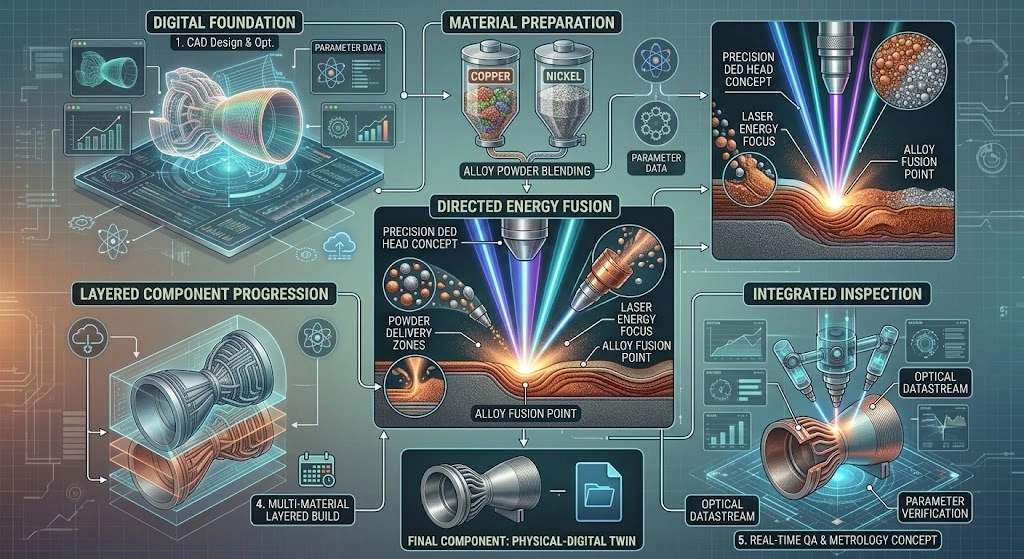
Additive Manufacturing Process Steps From CAD to Finished Part
The standard additive manufacturing process steps ensure repeatable mechanical properties across all custom parts:
- Digital CAD Design: Engineers create 3D computer models built for structural needs.
- File Slicing Preparation: Software divides the digital model into thin horizontal slices.
- Machine Setup & Feedstock Loading: Systems load tailored alloy powders into feed chambers.
- Layered Deposition: Energy beams melt metal feedstock directly onto the build zone.
- Post-Processing & Surface Refinement: Parts undergo stress-relief heat treatment and final finishing.
According to a detailed National Institutes of Health study on metal printing, precise control over deposition speed prevents porosity defects during production.
Additive Manufacturing Examples and Industrial Applications
Industrial applications highlight the practical utility of modern layer-by-layer metal deposition. Here are clear additive manufacturing examples:
- Aerospace Fuel Nozzles: Complex inner cooling paths built directly into single metal parts.
- Custom Machine Repairs: Restoring worn turbine blades and high-friction shafts directly on-site.
- Defense Components: Building custom replacement parts quickly without relying on distant factory chains using machines like the X-Series.
- Bespoke Wear Coatings: Applying tough, corrosion-resistant alloy layers onto low-cost base metals.
Major Business Benefits of Additive Manufacturing
Adopting modern additive systems solves high replacement costs and long operational delays. Modern companies rely on these key benefits of additive manufacturing:
| Manufacturing Factor | Traditional Subtractive Methods | Layered Additive Deposition |
| Material Scrap Waste | High (Up to 80% material loss) | Extremely Low (Targeted placement) |
| Production Tooling Needs | Requires custom dies and fixtures | Toolless direct digital printing |
| Part Repair Capability | Very limited or impossible | Direct clad repair on worn parts |
| Design Flexibility | Restricted by cutting tool paths | Complex inner features are made easily |
Choosing metal 3D printing protects operations against component supply shocks. Businesses build custom parts faster while saving raw materials.
Overcoming Traditional Supply Chain Bottlenecks
Global production chains remain fragile due to long shipping delays and unpredictable material shortages. Traditional foundries require months to produce complex molds and castings. When a critical component breaks, an entire production line halts while waiting for replacement parts. This extended downtime drains company profits and pushes project schedules back significantly.
Metal direct energy deposition changes how industrial facilities handle component replacements. Instead of waiting for overseas casting delivery, operators produce complex parts locally using digital design files. Stocking lightweight metal powders takes up far less physical space than storing large physical spare parts. This agile approach protects businesses from market volatility while keeping core operations running smoothly.
Advanced Metal Alloy Customization for Extreme Work Conditions
Industrial equipment often operates under harsh pressures, extreme heat, and severe corrosive exposure. Standard off-the-shelf metal alloys frequently struggle to withstand these aggressive environments over time. Upgrading an entire machine to use expensive superalloys quickly becomes cost-prohibitive for most manufacturing operations.
Directed energy deposition allows precise blending of different metallic feedstocks during the build process. Engineers apply ultra-tough, wear-resistant alloys precisely where high friction occurs, while maintaining standard steel for the structural core. This targeted multi-material deposition maximizes component durability without unnecessary material expenses. Custom material blending extends component lifespans and reduces overall maintenance requirements.
Smart Modern Strategies to Upgrade Production Lines
Industrial managers can update production lines without spending millions on brand-new equipment. Integrating modular deposition heads through seamless DED OEM Integration onto existing standard robotic arms turns basic manufacturing spaces into high-tech 3D printing setups. This step lowers initial equipment costs while expanding local fabrication options.
Combining layered metal building with standard CNC finishing creates ideal hybrid manufacturing setups. Machines deposit strong metal alloys quickly onto specific sections. Then, integrated milling heads smooth key connection points for perfect fits. Organizations seeking full operational support can utilize comprehensive FormAlloy Services to optimize production costs while maintaining high manufacturing precision.
Common Questions About Metal Fabrication Upgrades
What is additive manufacturing in simple terms?
It is a process that builds physical metal objects layer by layer from digital 3D files, cutting waste compared to carving parts from larger solid blocks.
What materials work best in direct energy deposition?
Powders and wires made from cobalt, nickel superalloys, stainless steel, titanium, and copper work best for direct metal deposition.
How does this tech reduce raw material waste?
It adds metal powder only where required by the CAD drawing, avoiding the high material scrap created by standard carving methods.
Can additive equipment repair existing worn components?
Yes, direct energy deposition places custom metallic layers onto damaged surfaces, restoring original part measurements without total replacement.
Why choose directed energy over powder bed fusion?
Direct energy deposition offers faster deposition rates, handles larger component sizes, and allows custom metal cladding directly onto existing physical parts.
Is additive manufacturing suitable for high-stress applications?
Yes, parts built with proper energy parameters reach dense structural properties that equal or beat standard cast components.
How does direct digital deposition save energy?
By using power only to melt the required metal, energy consumption drops compared to heavy foundry casting operations.
What industries use metal 3D printing technology daily?
Aerospace, defense, heavy energy production, automotive, and mining industries use this technology for quick repairs and custom parts.
Does layer fabrication require secondary surface finishing?
Depending on part tolerances, light post-machining or grinding ensures ideal fitting dimensions on functional connection surfaces.
Key Takeaways
- Metal additive fabrication builds components layer by layer to cut scrap waste.
- Direct energy deposition systems repair worn components without total part replacements.
- Toolless production helps companies manufacture custom parts on demand.
- Hybrid machine setups combine quick metal building with precise CNC finishing.
Transform Your Industrial Operations Today
Stop letting component lead times slow your business momentum. Modern metal deposition solutions deliver high-performance parts, custom alloy cladding, and reliable machine repairs right when you need them. Upgrade your manufacturing workflows and discover how tailored directed energy systems transform long component turnarounds into rapid production success. Explore advanced direct energy deposition technology by contacting an industry expert today.