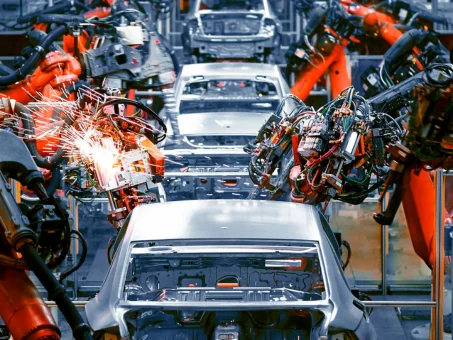
When your automated systems grind to a halt, the financial impact is immediate and severe. Every minute of unscheduled downtime translates into lost revenue, idle labor, and missed delivery windows. True efficiency relies on recognizing that robotic repair is not just about fixing a machine when it breaks; it is about restoring the integrity of your entire production workflow.
If you are currently relying on reactive maintenance, you are gambling with your profit margins. Industrial robot repair should be treated as a strategic component of your operation, not an emergency expense.
At FormAlloy, our approach ensures that your infrastructure remains resilient against the mechanical stresses of modern, high-speed manufacturing environments. When you prioritize the health of your robotic assets, you secure the foundation of your production capability.
1. Why Reactive Robotic Maintenance Increases Industrial Downtime
The most common mistake facility managers make is viewing robotic equipment repair as a task performed after a failure occurs. This approach ignores the reality of mechanical fatigue and component wear. When you wait for a total breakdown, you often face catastrophic failures that require expensive component replacements or total system overhauls.
- Avoid Catastrophic Failure: Proactive monitoring identifies wear before it leads to a total production stop.
- Reduce Hidden Costs: Reactive maintenance includes the high cost of expedited shipping, premium freight, and emergency labor.
- Optimize Asset Longevity: Regular interventions extend the life of your machinery far beyond standard expectations, protecting your capital investments.
- Predictability in Budgeting: Scheduled maintenance allows for precise financial planning, eliminating the volatility of unplanned emergency repairs.
Instead of waiting for a stoppage, focus on how your maintenance strategy aligns with your long-term manufacturing goals. Understanding the current landscape of robotics and manufacturing automation is essential for anyone looking to stay competitive in a global market. By utilizing manufacturing solutions that prioritize precision, you ensure that your robotic arms and automated systems remain operational for years longer than the industry average.
2. The Financial Reality of Specialized Robotic Arm Repair
When a critical component fails, the knee-jerk reaction is often to replace the unit entirely. This is rarely the most cost-effective decision. High-end robotic arm repair utilizes advanced additive processes to restore geometries and material properties that are identical to the original part.
- Bypass Long Lead Times: Repairing parts in-house or through specialized partners eliminates the multi-week wait times often associated with procuring new components.
- Improve Material Properties: During repair, you can apply superior, wear-resistant alloys to specific areas prone to high stress, making the part stronger than its original factory configuration.
- Enhance ROI: Extending the life of current assets is significantly cheaper than procuring new, expensive robotic systems, allowing you to reallocate capital to other growth areas.
- Preserve Existing Calibrations: Specialized repair maintains the original alignment and mechanical tolerances of your robotic arm, reducing the need for extensive recalibration after reinstallation.
For those managing complex industrial workflows, investing in advanced manufacturing processes can completely change your ROI calculations. When you choose to repair rather than replace, you are not just saving money; you are extending the operational lifespan of high-value assets.
3. Elevating Robot Maintenance Services for Maximum Uptime
Your Robot Maintenance Services provider should do more than just swap out broken parts. They should offer solutions that improve the durability of the machine. The modern approach to robotics emphasizes that systems must be robust enough to handle high-stress industrial environments.
- Structural Integrity: Ensure repairs contribute to the long-term health of your robotic fleet by prioritizing metallurgical bonding that creates a unified component structure.
- Wear Resistance: Apply specialized coatings that prevent the recurrence of the specific mechanical issues that caused initial failures, such as abrasion or thermal degradation.
- Root Cause Analysis: Tailor restoration to mitigate future risks based on detailed analysis of how the failure originally occurred, ensuring the same issue does not happen twice.
- Technical Documentation: Keep detailed records of every repair, creating a historical performance profile for each robot, which helps in predicting future maintenance needs.
When you work with experts who understand the nuances of DED, you gain access to repairs that add wear-resistant coatings and enhance mechanical properties during the restoration process. Check our services to see how we help clients optimize their equipment for the long haul.
4. Precision Engineering in Automation Equipment Repair
Reliable Automation Equipment Repair hinges on metallurgical bonding. Many standard repair shops use methods that do not fully integrate with the substrate of the part, leading to future failures at the repair site. You need a solution that creates a seamless, dense bond.
- Precision Restoration: Using DEDSmart technology ensures that components match original material specifications with unmatched accuracy and repeatability.
- Minimal Post Processing: Advanced deposition allows for near net shape results, which significantly saves time on finish machining and reduces your overall turnaround time.
- High Performance Bonding: Ensure that repairs stand up to intense heat, pressure, and constant motion without cracking, delamination, or structural weakness.
- In-Process Monitoring: Real-time monitoring during the repair process guarantees that the deposition is consistent and meets the highest quality standards before the part ever leaves the shop.
We provide DED products and services designed to restore parts to full functionality. Precision engineering also involves the careful analysis of the failure mode. We treat every robotic component as a vital piece of a larger, complex puzzle, ensuring that when it returns to the factory floor, it is ready to perform at the highest possible level of reliability.
5. Future Proofing Your Industrial Workflow
The transition toward smarter, more resilient manufacturing is well underway. Companies that fail to adapt their approach to robotic repair will find themselves outpaced by competitors who leverage better repair technology. Integrating advanced materials and precise restoration techniques into your standard operating procedures is the only way to safeguard your facility against the high cost of downtime.
- Strategic Audits: Regularly evaluate your maintenance standards to catch potential failures before they stop your production line.
- Asset Management: View your equipment as long term assets rather than consumables that need constant, expensive replacement.
- Competitive Edge: Superior repair technology allows your facility to operate with higher uptime, consistent quality, and lower total cost of ownership than your market competitors.
- Scalable Solutions: Ensure your repair partners have the capacity to scale their services as your fleet of robotic equipment grows or evolves.
If you are ready to stop the cycle of constant equipment failure, reach out to our contact us page. By investing in the right repair strategies today, you are protecting your revenue streams and ensuring that your facility remains at the cutting edge of industrial capability for years to come.
Frequently Asked Questions:
How can I tell if my equipment needs professional robotic repair?
Seek help when robots show increased vibration, unusual noises, loss of precision, or sensors indicate irregular cycle times, suggesting wear that necessitates immediate technical restoration.
Why is metallurgical bonding important for robotic parts?
It ensures repaired sections are permanently fused to the substrate, providing superior strength, heat resistance, and long-term durability that standard weld repairs often fail to achieve.
How does proactive maintenance impact production schedules?
It prevents unscheduled, costly breakdowns by addressing component wear before failure occurs, ensuring your production line maintains consistent throughput and avoids significant financial losses from downtime.
Can robotic repair extend the life of legacy equipment?
Yes, advanced techniques allow you to rebuild worn components to original specifications or even improve them, keeping legacy machines in service well beyond their intended cycle.
What is the advantage of using additive manufacturing for repairs?
Additive manufacturing allows for precise material deposition, minimizing heat-affected zones, reducing post-processing needs, and restoring complex geometries that traditional methods cannot easily achieve.
Is it always cheaper to repair than to replace robots?
Repair is usually more cost-effective, as it avoids massive capital expenditure and the long lead times associated with procuring new, high-end industrial robotic units.
How do I choose the right provider for automation equipment repair?
Select a provider with deep metallurgical expertise, advanced in-process monitoring, and the ability to restore components with full density for reliable, high-stress industrial operation.
What specific materials can be used in robotic component restoration?
Modern systems utilize a range of powders and wires, including aerospace grade alloys like IN718 and IN625, to ensure your repaired parts possess the required mechanical properties.
How does robotic repair contribute to environmental sustainability?
Repairing components reduces the need to manufacture new parts, lowers energy consumption associated with raw material processing, and minimizes industrial waste throughout your facility’s operational lifecycle.
Key Takeaways
- Moving from emergency repairs to a data-driven maintenance model significantly reduces downtime and operational costs.
- Utilizing DED deposition ensures robotic components are restored with dense materials that often exceed the durability of original parts.
- Strategic repair of robotic arms is a highly effective way to extend the lifespan of capital assets, offering superior ROI versus replacement.
- Investing in precision engineering and high-quality maintenance future-proofs your production line against the escalating costs of equipment failures.
- Manufacturers who integrate sophisticated repair technologies as a standard workflow maintain higher productivity and remain more agile than competitors.