TL;DR:
Metal 3D printing builds solid metal parts layer by layer directly from digital CAD files. This process replaces long wait times and high tooling costs with fast, custom manufacturing. Learn how modern directed energy deposition transforms production efficiency for high-value components.
How Does Metal 3D Printing Work for Industrial Production?
If you are facing sudden production stops, missing rare replacement parts, or dealing with expensive tooling bills, you are not alone. How does metal 3D printing work to solve these major production bottlenecks? Metal additive manufacturing turns digital design files into dense, high-strength metal components without using custom molds or traditional cutting tools.
Instead of shaving down a large block of material, a computer-controlled system melts raw metal powder or wire layer by layer. A concentrated laser or electron beam melts the material at exact points, building complex internal structures that classic machining cannot match. This simple process allows factories to produce custom tools, flight-ready parts, and urgent repairs in days rather than months.
What Is the Core Metal 3D Printing Process?
The metal 3D printing process follows four basic steps. Every step works to create accurate, strong, and reliable metal hardware.
1. Digital CAD Modeling
Engineers create a 3D digital model using CAD software. The software splits the digital model into thousands of thin horizontal layers.
2. Material Preparation
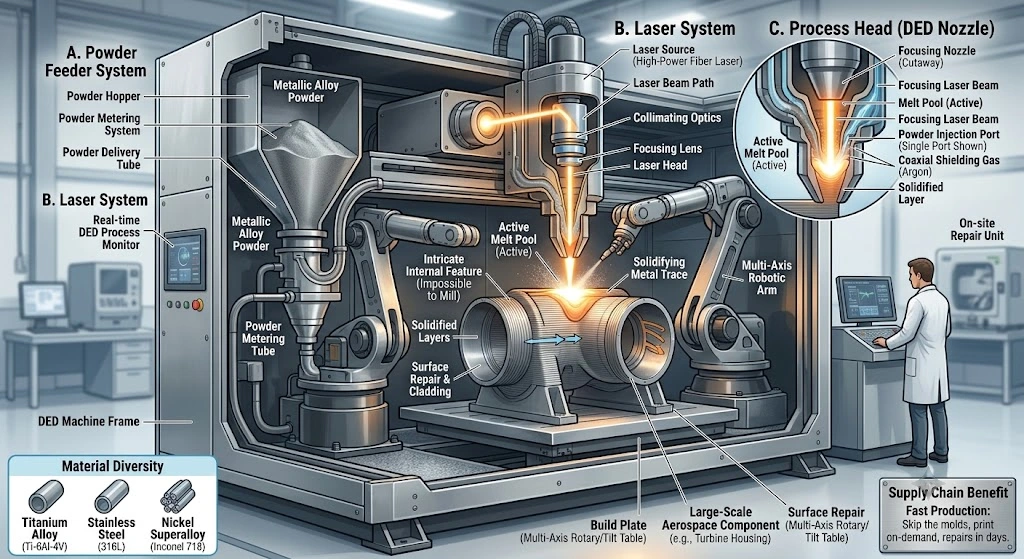
High-purity metal powder or metal wire is loaded into the machine chamber. The system pumps in argon gas to protect the hot metal from oxygen damage.
3. Layer by Layer Thermal Fusion
A high-power energy source melts incoming metal material right onto a base plate. The energy beam follows the exact path defined by the 3D model.
4. Cooling and Post-Processing
The printed part cools under controlled conditions. Thermal stress relief and minor surface cleaning prepare the part for final deployment.
How Metal 3D Printing Works Across Leading Methods
Understanding how metal 3D printing works requires looking at the main hardware systems used in modern manufacturing. The table below compares the primary approaches used today:
| Technology Type | Material Form | Energy Source | Key Advantage | Best Application |
| Directed Energy Deposition | Powder or Wire | Fiber Laser | Rapid deposition & part repair | Large structures and cladding |
| Laser Powder Bed Fusion | Fine Powder | Infrared Laser | Extremely high detail | Small, complex interior channels |
| Electron Beam Powder Bed | Fine Powder | Electron Beam | Low thermal stress | High-temperature aerospace alloys |
Different technologies fit different project goals. High-speed systems like Directed Energy Deposition offer fast material deposition rates and allow repairs directly on existing parts.
According to a study published by the National Institute of Standards and Technology, active thermal control and real-time beam tracking during laser melting allow modern systems to produce advanced high-entropy alloys with exceptional strength.
Key Benefits of Metal Additive Manufacturing Process Over Casting
The modern metal additive manufacturing process addresses many painful challenges found in traditional casting and CNC machining.
- No Costly Tooling: Traditional manufacturing requires expensive, custom molds that take months to create. Metal printing builds parts directly from code.
- Complex Geometry Support: Traditional drills cannot create curved internal cooling lines. Additive systems print open interior channels with total ease.
- Lower Material Waste: Traditional machining chips away up to 90% of expensive raw material blocks. Printing uses only the exact amount of metal needed.
- On-Demand Component Repair: Damaged turbine blades and worn valve bodies no longer need to be thrown away. Laser deposition adds fresh material directly onto worn surfaces.
Research documented by NASA Science Research highlights how optimized laser energy deposition reduces equipment wear while delivering flight-ready components.
Main Types of Metal 3D Printing Technology
Selecting the correct metal 3D printing technology depends on your component size, production budget, and required strength levels.
Directed Energy Deposition (DED)
DED systems feed raw metal powder or wire through a specialized nozzle while a laser melts the material instantly. This technology is ideal for building large components, applying hard-facing layers, and repairing high-value equipment.
Laser Powder Bed Fusion (LPBF)
LPBF uses a roller to spread thin layers of metal powder over a build plate. A focused laser welds the powder particles together layer by layer. This method delivers sharp geometric detail for smaller parts.
To explore options for upgrading your production workflow, check out our selection of metal 3D printers. If you need dedicated component fabrication support, review our specialized additive manufacturing services.
Where Industrial Metal 3D Printing Solves Critical Problems
Top global companies rely on industrial metal 3D printing to solve tough design and delivery challenges across major industries:
- Aerospace: Engineers print lightweight rocket nozzles and heat exchangers that withstand extreme pressure.
- Energy and Defense: On-site printers fix worn valve seats and pump impellers without long factory shutdowns.
- Automotive: Teams print custom tooling, lightweight brackets, and high-performance engine components on demand.
To evaluate how custom hardware can upgrade your workflow, read about our L-Series metal 3D printer for compact production goals, or discover the capabilities of our X-Series metal 3D printer for large-format builds. You can also view our DED print head technology to learn how custom deposition heads integrate into existing machinery.
What Raw Materials Power Industrial Additive Fabrication?
The performance of any printed component relies entirely on the feedstock material chosen for the build process. Modern systems utilize a wide range of specialized metal alloys designed to withstand high temperatures, abrasive wear, and harsh chemical environments.
Superalloys and Stainless Steels
Inconel and cobalt-chromium superalloys retain exceptionally high tensile strength even under intense operational heat. Stainless steels like 316L and 17-4 PH offer outstanding corrosion resistance and mechanical stability for everyday industrial usage.
Reactive and Lightweight Metals
Titanium alloys provide incredible strength-to-weight ratios for aerospace applications where every gram matters. Aluminum alloys offer superior thermal conductivity and light weight, perfect for high-efficiency heat exchangers and automotive engine blocks.
How Post-Processing Enhances Mechanical Performance
While additive hardware forms the shape of a component, post-processing steps ensure the final part meets rigorous industrial quality standards. Thermal and mechanical treatments refine the internal structure and surface finish of every printed part.
Heat Treatment and Stress Relief
Rapid melting and cooling cycles can create internal thermal stress inside printed metal. Placing parts in a vacuum furnace relieves this stress, prevents warping, and establishes a uniform microstructural grain layout throughout the metal body.
Surface Machining and Finish Improvement
For high-precision mating surfaces, CNC milling finishes critical contact zones. Abrasive blasting and chemical polishing clean outer surfaces, removing partial powder grains and creating smooth, professional finishes ready for immediate field installation.
Common FAQs About Metal Additive Manufacturing
How strong are metal 3D-printed parts?
Metal parts made with professional additive technology equal or exceed the strength of traditional cast metal components. Proper laser melting ensures high material density and uniform grain structures.
What metals can be used in metal 3D printing?
Most industrial metals can be printed easily. Common materials include stainless steel, titanium, nickel superalloys, cobalt-chrome, aluminum, and high-conductivity copper alloys.
Can metal 3D printing repair existing worn parts?
Yes. Systems using Directed Energy Deposition can melt new metal directly onto worn parts. This restores the original part geometry and saves thousands of dollars in replacement costs.
How fast is the metal printing process?
Build speed depends on the total part size and the chosen technology. Small parts print in hours, while large structural components take several days, far faster than traditional casting schedules.
Is post-processing necessary after printing?
Most metal parts require minor post-processing. Standard steps include thermal stress relief, removing parts from the build plate, and light surface finish grinding or machining.
What is the main difference between DED and powder bed fusion?
DED feeds metal powder directly into a laser beam for fast deposition and part repair. Powder bed fusion melts metal powder layer by layer inside a closed powder box.
Does metal 3D printing replace CNC machining completely?
No. Metal 3D printing works alongside CNC machining. Printing creates complex part shapes quickly, while CNC machining adds final smooth finishes to critical mating surfaces.
Is metal additive manufacturing cost-effective for low-volume production?
Yes. Eliminating expensive tooling costs makes additive manufacturing cost-effective for prototype development, custom components, and low-volume production runs.
How does metal printing reduce supply chain risk?
Metal printing allows on-demand manufacturing from local digital files. This removes reliance on overseas suppliers and eliminates multi-month shipping delays.
Key Takeaways
- Metal 3D printing builds fully dense, high-strength metal parts directly from digital CAD files.
- Key technologies like Directed Energy Deposition enable fast manufacturing, surface cladding, and direct part repair.
- Additive production removes expensive tooling fees, cuts lead times from months to days, and reduces raw material waste.
- Modern systems print advanced alloys for critical aerospace, defense, and industrial applications.
Transform Your Production Workflow Today
Do not let long supply chain delays or costly tooling hold back your manufacturing goals. Upgrade your factory capabilities with reliable metal additive solutions built for severe operational demands. Contact our engineering team today to review your project needs and start printing high-performance metal hardware on demand.